About James
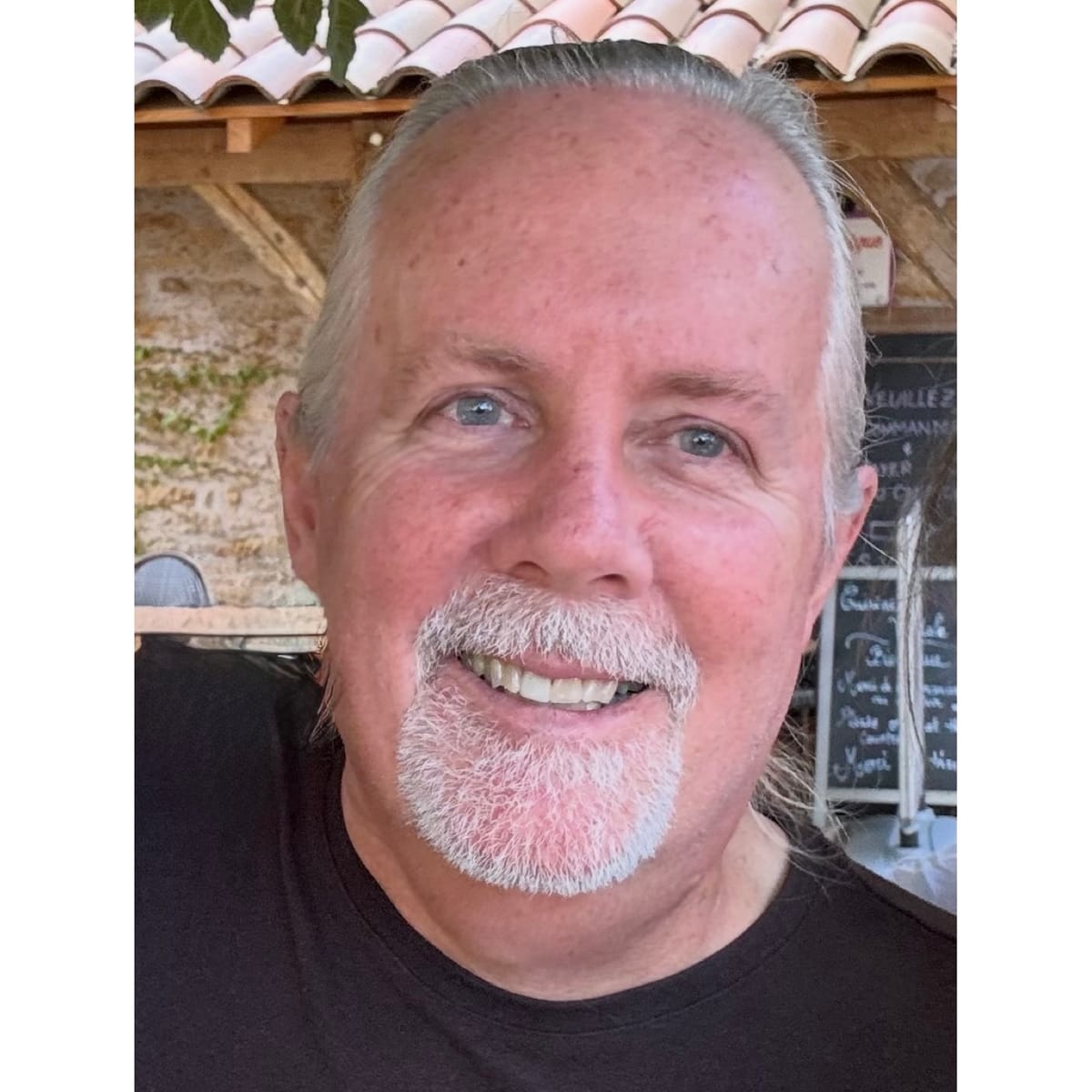
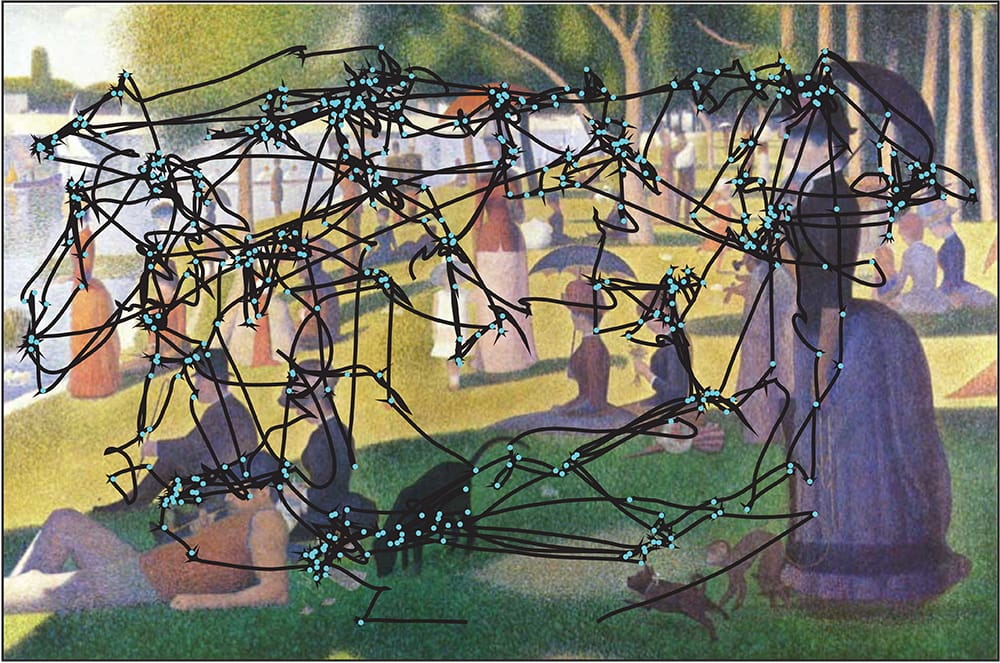
Hi, my name is James Michael Corrigan and I write under the pseudonym StillJustJames. Why do I do that? It's not a game that I am playing, it involves an insight that most of what we think we know is constrained by our cognitive frame. A cognitive frame, as I have defined it, is like a 'worldview,' but that sounds so expansive – "Wow! A view of the whole world!" – and what I am pointing to is, in fact, that our view is so limited, being constrained by the prejudgments about what is important that we have been inculcated and enculturated with. This is why I like to use the image of a painting in its frame to show what I mean:

While viewing a painting, our eyes don't see anything outside the frame, and likewise, when we think inside a limited cognitive frame, our thoughts never go beyond that frame. It's as if we are living in a silo underground with no way out.
So how does that explain my pseudonym? Well, what do you hear when you say that name, and why? Perhaps, it doesn’t mean what you think it does. I’ll give you a hint: there is no verb in that name, it's just a name. Were you taking it as if it was something else? Perhaps you heard a resignation of failure in it? There is much that we all overlook in our daily lives, because we cannot see through our prejudgments.
I am a lifelong meditator and I have a PhD in philosophy. My research focus is on advanced meditation practices, especially in Tibetan Buddhism, theories of Consciousness, and scientific paradigms and the cognitive framing within which they are developed. Now, that may read like I am all over the place – meditation, Buddhism, consciousness, and science — the truth is that I do not recognize the foundational delimitations that see them as different subjects.
The goal of my work is to promote an unconstrained science founded upon an inclusive cognitive frame that allows us to go beyond the inherent limitations of our current mechanical materialism. That frame is the reason that we see ourselves as a collection of mechanisms, with some kind of dualistic constitution of matter and spirit, or mind and body. To advance my goal, I developed a novel paradigm for understanding ourselves and our world, which I call Responsive Naturing. The original genesis for this paradigm was my meditative and contemplative practice using a singular meditation technique called Great Responsiveness Meditation which involves a foundational 'turning around' of sound and hearing.
Unlike so many others that are concerned by the limitations of mechanical materialism and work towards a more inclusive paradigm while leaving the fundamental questions of consciousness, time, and space generally unchanged, I have developed a productive principle that explains in detail how Responsive Naturing actually natures all life. I call this theory Cognizant Gravitation Only. It consists of a fully developed and necessary role for cognizance of what is done, rather than trying to find a place or origin for the abstract entity called ‘consciousness' which has no accepted explanation. In fact, most of the 350+ theories of consciousness try to find where consciousness is, and how it operates in a dualistic sense, and they are more properly recognized to be theories of clairvoyance – knowing at a distance – which raises the question as to why we need our senses, if we are clairvoyant.
I strongly believe that only by changing how we think about our problems, how we see ourselves, and how we relate to each other and our shared world, will we be able to overcome the extreme calamities that we face today. But we can't fix our problems with our old ways of thinking and acting that caused these problems to begin with. So my efforts to develop the paradigm of Responsive Naturing and the theory of Cognizant Gravitation Only is one way that I see us breaking out of our old ways of thinking and acting.
My doctoral dissertation, "There is a Way of Seeing the World Different," was on the subject of what I refer to as Biphasic Perception, and it focuses on how this structure, and the absence or failure of the second phase, that of decorating our 'direct experiences,' which I call imperiences, explains so many open questions about perception. We don't notice these two as phases today, but that they are actually occurring in all of our perceptions was known to Homer in his writing, in the earliest Indian texts in which the first phase was called 'nondual perception,' and, as I presented in part in my dissertation, our early modern human ancestors knew of these phases and used a particular painting technique in some of their art to communicate an actual experience of the motion of their subjects – 32,000 years ago. Scientists know that this was the goal of the painting technique, which they refer to as the "prehistory of cinema," but have no explanation for how it works.
An open question that is actually explained by this understanding is why we see fluid motion when we watch films and videos. You would think that science had worked this out, but the only explanation they have for this is that the images blur together and this gives us an illusion of motion. I proved that this is completely false, by showing that we can see the individual frames at extremely high speeds if the contents of each frame is random – and even at 77 fps we recognize what is in each frame with a very high degree of accuracy. I also explain why we only see fluid motion at 20 fps or greater – the second phase of our thinking, which below 20 fps is focused on each frame, cannot keep up if the frame rate is 20 fps or higher, and so we see fluid motion, and we settle in to watch the movie, thinking about the fluid scenes that are produced by our initial phase perception alone.
If you would like to contact me directly, you can email me at: james@stilljustjames.com